

 By
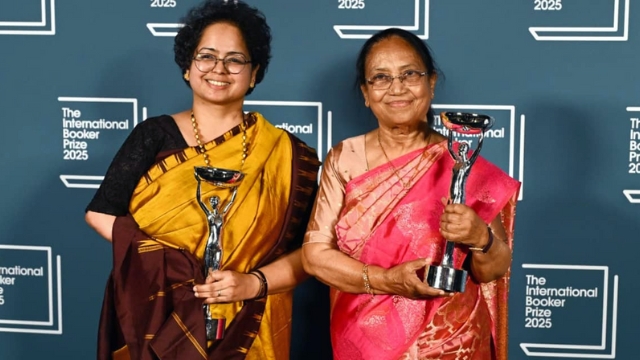
By In a historic literary milestone, Kannada writer Banu Mushtaq has won the International Booker Prize 2025 for her poignant short story collection Heart Lamp: Selected Stories. Translated into English by Deepa Bhasthi, the book marks not only the first Kannada work but also the first short story collection ever to win the prestigious award.
The International Booker Prize, known for honoring the finest works of fiction from around the globe translated into English, has traditionally been dominated by novels and works from European and East Asian languages. Mushtaq’s win breaks multiple barriers—not only by recognizing the short story form but by spotlighting a regional Indian language often overshadowed on the global literary stage.
The collection features twelve deeply evocative tales centered on the lives of Muslim women in southern India. Through minimal prose and sharp emotional insight, Mushtaq weaves narratives of faith, silence, survival, and inner light—hence the symbolic title Heart Lamp. Each story draws from the social and spiritual currents of everyday life, making the collection both intimate and universal.
Several stories in the collection—such as “Prayer Beads,” “Miraj,” and “The Waiting Room”—have been noted by critics for their subtle yet unflinching portrayal of gender, tradition, and resilience. Mushtaq’s writing style is spare yet deeply lyrical, allowing her characters’ emotions to take center stage while leaving space for the reader’s interpretation. She captures the invisible burdens of women navigating societal expectations while preserving their inner sanctity.
The Booker jury praised the work for its lyrical depth and cultural resonance. In a statement, the panel noted that Mushtaq’s stories “carry the quiet dignity of lives lived in the margins and the fierce grace of survival without spectacle.”
Mushtaq, who has long been a respected voice in Kannada literature, spoke of the win as a recognition not just for herself, but for “regional languages, unheard women, and the power of translation.” Deepa Bhasthi, the translator, called the book a “labor of love,” saying it took years of conversations and careful interpretation to bring Mushtaq’s unique voice to global readers.
Bhasthi also emphasized the delicate balance required to retain the flavor and cadence of the original Kannada while making the text accessible and evocative for an English-speaking audience. Her role, she said, was “to carry over the silences between Mushtaq’s sentences, not just her words.”
The award is being celebrated as a breakthrough moment for Indian vernacular literature. Scholars and authors across India have applauded the recognition of a regional language writer on such a major international platform. For many, it symbolizes a broader shift toward inclusivity in world literature—where storytelling from grassroots India is no longer peripheral but central to the global narrative.
“It’s a validation of the emotional and philosophical depth that regional Indian languages contain. It’s also a powerful reminder that world literature must include stories from the grassroots,” said one jury member.
The win has already sparked interest in new translations of Indian literature, with publishers reaching out to lesser-known authors writing in Tamil, Malayalam, Bengali, and Marathi. It is expected that Heart Lamp will inspire a wave of similar efforts to uplift regional voices and preserve linguistic diversity in contemporary literature.
In the wake of the win, Heart Lamp is seeing soaring demand across bookstores and digital platforms in both English and Kannada. Literary critics have already called it a modern classic and one of the most significant publications of the decade. Book clubs, university reading lists, and translation workshops are all turning to the text as a touchstone for both literary craft and cultural authenticity.
More than just a literary prize, the success of Heart Lamp is a torchlight moment for underrepresented voices—an affirmation that the quietest stories often shine the brightest. Banu Mushtaq’s achievement is not only a personal triumph but a collective victory for Indian storytelling in all its linguistic and emotional richness.